Ask most young swimmers where races are won and they’ll usually say the start, the finish, or the swim itself.
In reality, some of the biggest gains in swimming happen between the walls.
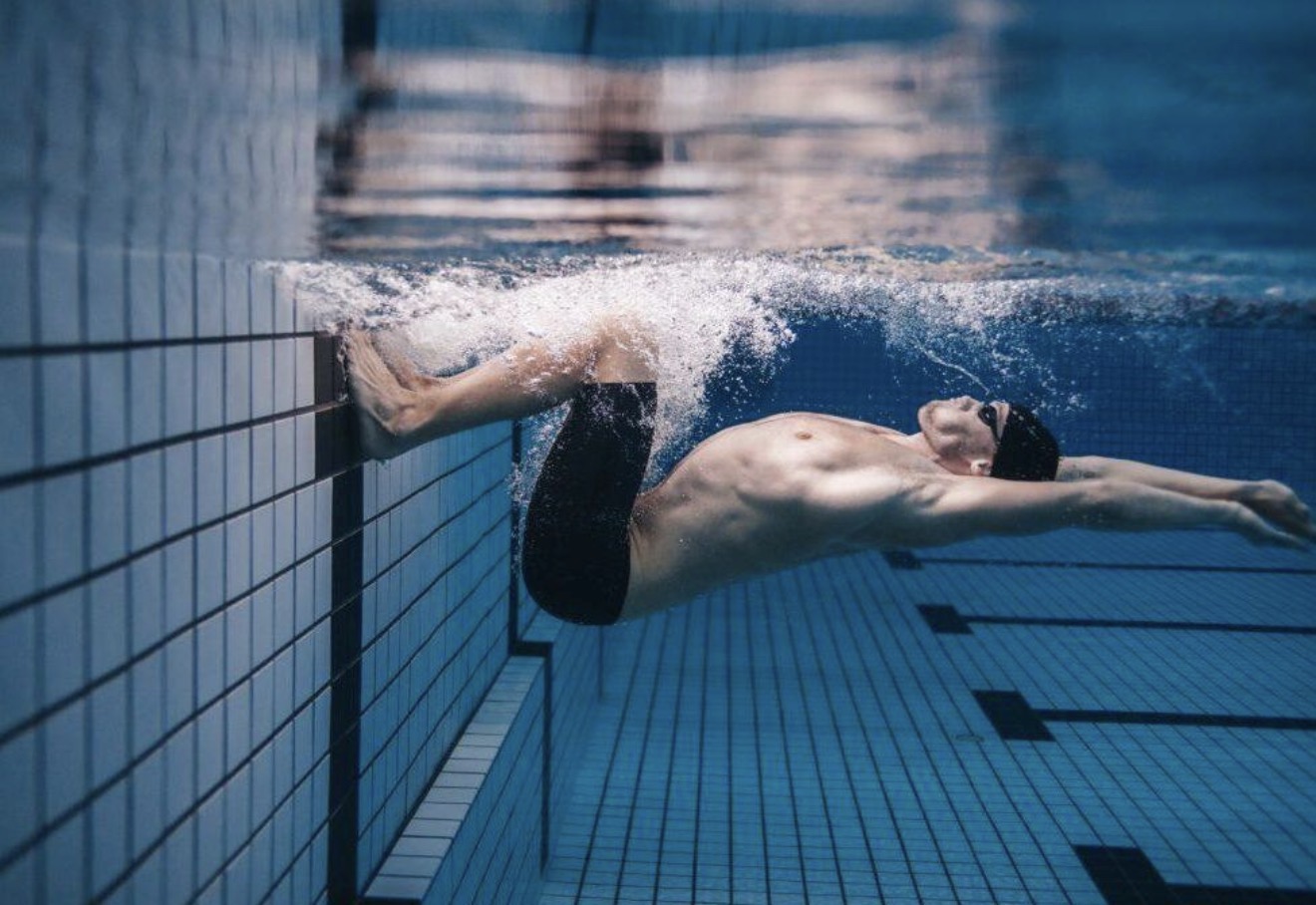
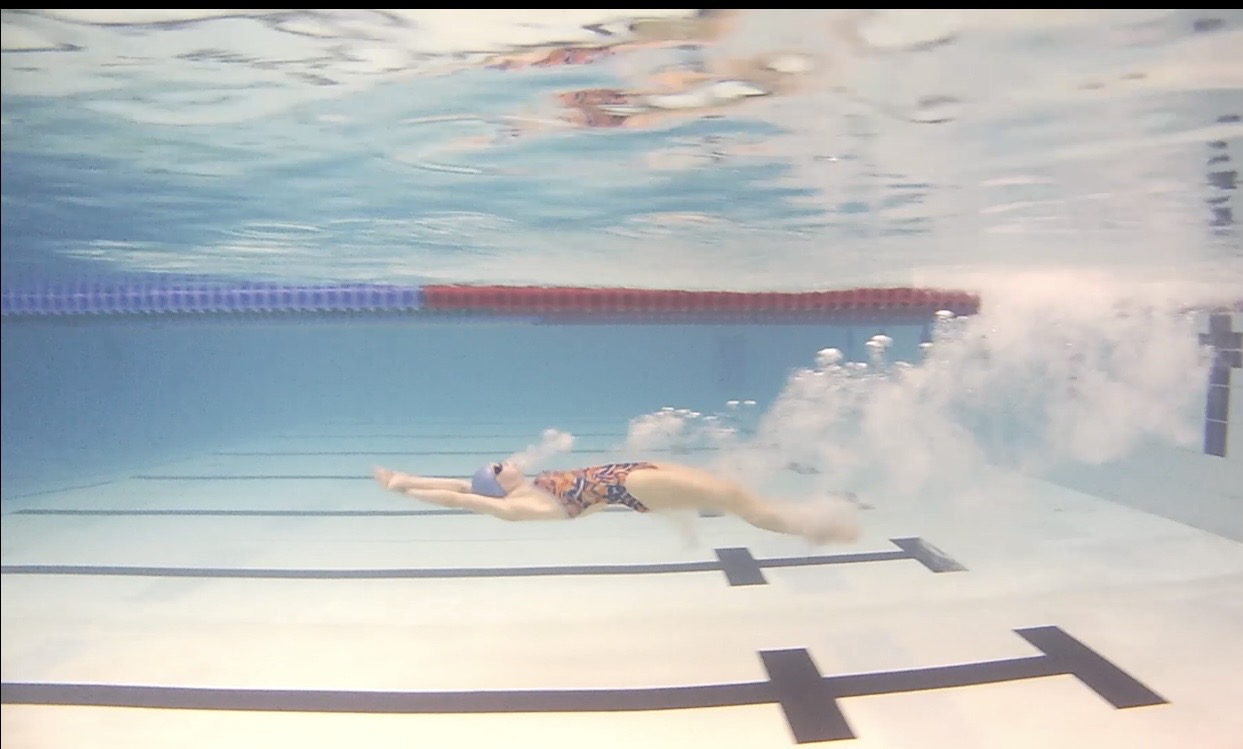
The underwater phase is often described as the “fifth stroke” because it is the fastest a swimmer can travel through the water. Yet it is also one of the most neglected skills in age group swimming.
After analysing dozens of swimmers through IT Swim Lab Performance Analysis sessions, several common patterns appear repeatedly across all four strokes.
These mistakes are not usually caused by a lack of effort. They are caused by a lack of understanding of how the body should move underwater.
Mistake 1: Loss of Streamline Integrity
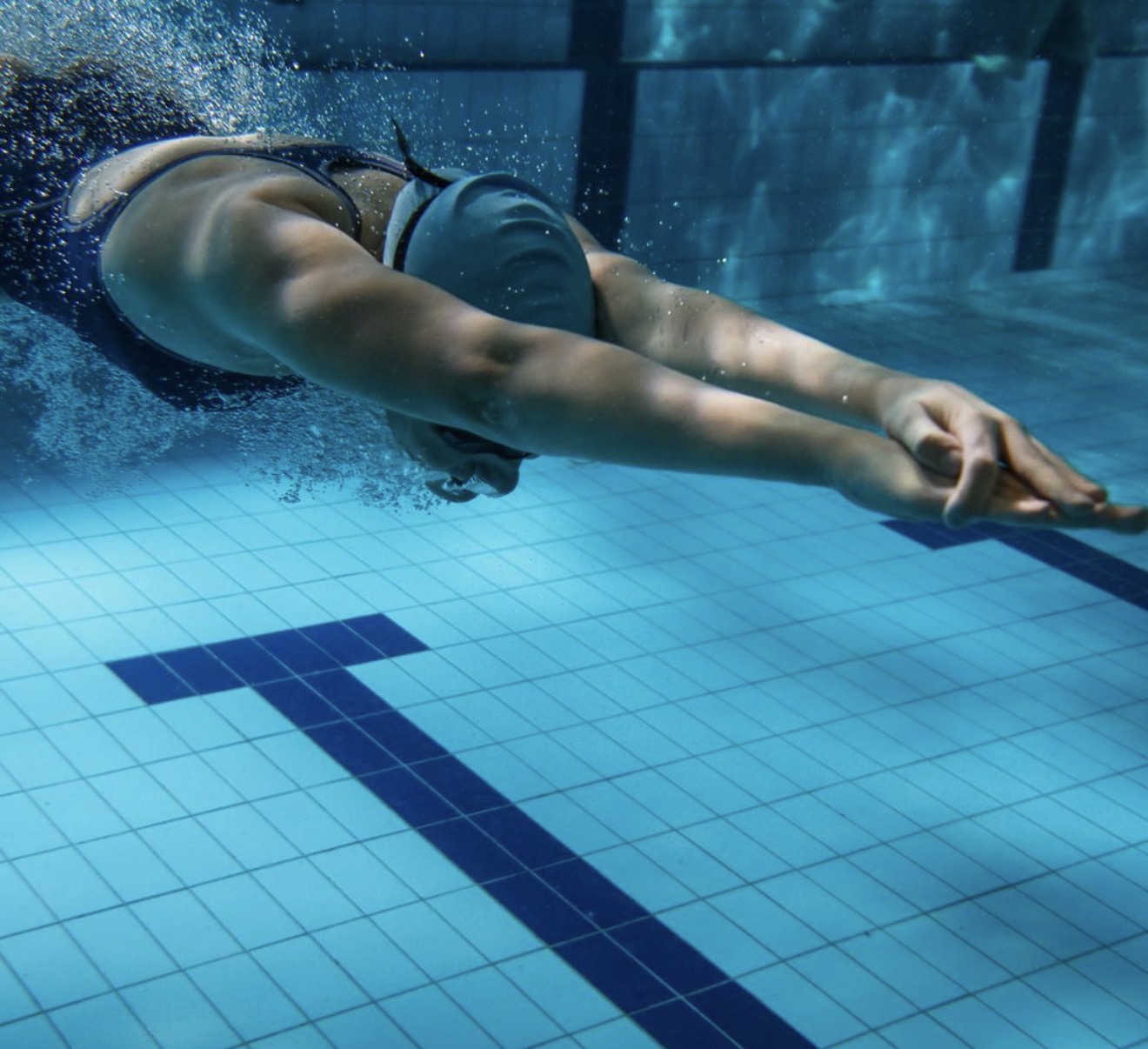
A streamline is not simply placing the hands together.
A true streamline is a rigid body position from fingertips to toes. When the arms separate, the head moves, the shoulders relax or the core disengages, drag is immediately created and speed is lost.
- Arms separating underwater
- Head lifting away from the arms
- Loose shoulders
- Bent hips
- Excessive body movement
Mistake 2: Kicking From The Knees
This is by far the most common underwater error seen in age group swimmers.
Many young swimmers attempt to create power by bending their knees excessively and kicking up and down. The result is what coaches often describe as a cycling action.
- Large knee bend
- Feet travelling forwards towards the stomach
- Hips remaining still
- Uneven kick rhythm
- Legs separating excessively
Mistake 3: No Hip Engagement
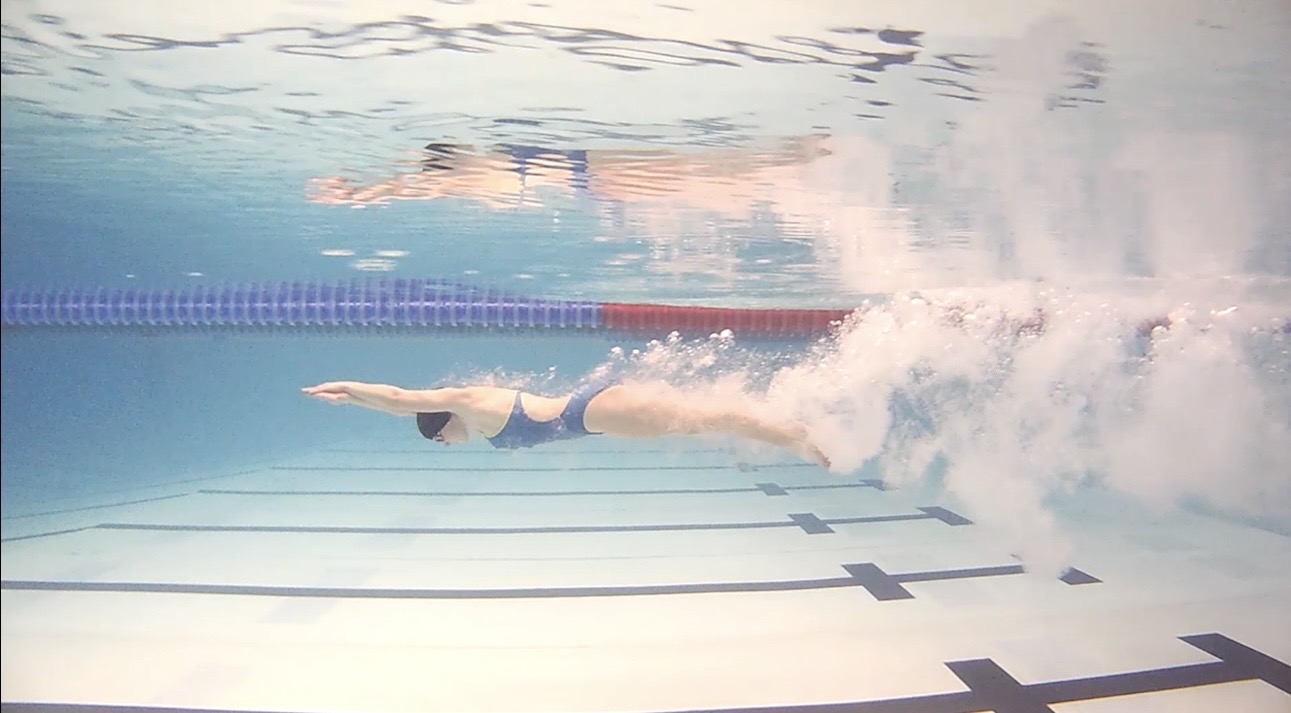
Fast underwater kicking starts from the core. The chest initiates the movement, the hips transfer the force, and the legs and feet finish the movement.
Many young swimmers skip the middle stage completely. The hips stay still while the knees attempt to generate all the propulsion.
Mistake 4: No Whiplash Effect
Elite underwater kicking is not produced through muscular effort alone. It is created through timing.
The movement flows: Chest → Core → Hips → Thighs → Feet → Toes.
Each segment accelerates the next. Without this sequence the swimmer simply bends their knees and loses speed.
Mistake 5: Breaking Out Too Early
Many swimmers panic underwater. As soon as they feel uncomfortable they rush to the surface.
Often they are still travelling faster underwater than they would be swimming on the surface. Learning to stay calm underwater is a skill that develops over time.
Bonus: Hand Entry and Rotation Control
One of the earliest signs of poor body control is allowing the head to rotate excessively during freestyle breathing.
Swimmers should learn to keep the head stable while rotating from the core and hips. Excessive head movement disrupts alignment, increases drag and often leads to wider hand entries.
Simple Home Exercises To Improve Underwaters
Core stability, streamline control and body alignment.
Underwater body position, core engagement and hip control.
Streamline strength and shoulder stability.
Core control and hip coordination.
Hip-driven kicking and leg endurance.
Final Thoughts
The fastest swimmers are not always the strongest swimmers. More often, they are the swimmers who maintain the best shape.
Before worrying about bigger kicks, stronger pulls or more power, young swimmers should first learn to hold a strong streamline, engage their core, move from the hips, create a smooth whiplash action and carry speed further from every wall.
Master these skills and every race becomes faster. The easiest speed to gain in swimming is often the speed that happens underwater.
Want to know whether your swimmer is losing speed underwater?
IT Swim Lab performance reviews include underwater analysis, stroke-by-stroke feedback, starts and turns assessment, race pace metrics and a personalised technical development plan.
Book a performance review